Aug 19 2026

CECOEDECON

CECOEDECON event banner

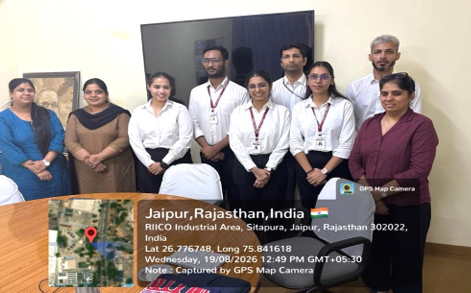
Educational Visit to CECOEDECON

The educational visit to the Centre for Community Economics and Development Consultants Society (CECOEDECON) provided valuable insights into community development, sustainable livelihoods, rural empowerment, women’s empowerment, and rights-based development approaches.

About CECOEDECON

CECOEDECON is a Jaipur-based nonprofit organisation dedicated to inclusive, sustainable, and rights-based development. It works across several thematic areas, including livelihoods, health, education, gender equality, child protection, climate change, and governance.

With a strong emphasis on community mobilisation, collective action, local institutions, and people-centric development models, CECOEDECON has emerged as an important catalyst for grassroots action and policy advocacy.

Mission

To strengthen the capacities of marginalized communities and development partners through multiple strategies at different levels, enabling them to act independently and secure their rights for long-term well-being.

Vision

To promote development that is socially acceptable, economically viable, environmentally sound, impactful, and responsive to the needs and concerns of underprivileged and marginalized communities.

Organisational Journey

CECOEDECON’s journey began in 1981, when the Chaksu area was severely affected by flooding from the Dhundh River. Social workers associated with KASA initiated land-reclamation activities, leading to the formation of CECOEDECON, which was formally registered in 1982.

During its first two decades, the organisation primarily focused on natural resource management, establishing community-based organisations and undertaking soil and water conservation initiatives.

In the following decade, CECOEDECON adopted a rights-based approach with a focus on education, health, microfinance, disaster preparedness, women’s leadership, and sustainable agriculture. Self-help groups were formed at the block level, with loans offered at minimal or zero interest rates.

From 2010 onwards, climate resilience, natural resource management, and child rights became central themes. Its current theme-based approach is organised around three broad areas:

  • Economic Justice: Strengthening livelihoods and increasing farm income.
  • Basic Rights: Addressing sexual and reproductive health, adolescent development, skill development, gender-based violence, and related concerns.
  • Civil Society and Institutional Development: Building strong community institutions and development partnerships.

Programmes and Practical Exposure

The visit included detailed presentations on CECOEDECON’s history, focus areas, operational strategies, and major programmes. Students learned about initiatives such as:

  • SWABHIMAAN
  • Child Development Projects
  • Access to Justice
  • Digital Disha
  • SUZTAIN
  • Anubhuti
  • School Mitra

The interaction provided practical exposure to project planning, implementation, monitoring, evaluation, and field-level operations. Since 2020, CECOEDECON has expanded its presence across Rajasthan through flagship initiatives such as PIIRD, supported by MISEREOR; SWABHIMAAN, supported by UNFPA; and Child Development Projects supported by ChildFund India and other development partners.

Key Learnings

  • The role of nonprofit organisations in grassroots development.
  • The importance of community participation and collective action.
  • Women’s empowerment and inclusive decision-making.
  • Capacity building and the strengthening of local institutions.
  • The value of stakeholder partnerships in programme implementation.
  • Effective project planning, monitoring, evaluation, and management.

Challenges Identified

  • Limited financial resources.
  • Low literacy levels within some communities.
  • Accessibility challenges in remote rural areas.
  • Persistent gender inequality.
  • Environmental and climate-related concerns.
  • Long-term sustainability of development programmes.

Conclusion

Overall, the visit deepened the students’ understanding of grassroots development and demonstrated the importance of inclusive, sustainable, and participatory approaches to social transformation. It also highlighted how strategic planning, community ownership, and collaborative partnerships can contribute to meaningful and lasting development outcomes.

View PDF
x
x