Master of Public Health (MPH) - Johns Hopkins University in Cooperation with IIHMR University, Jaipur
The Johns Hopkins Bloomberg School of Public Health (BSPH) has offered a Master of Public Health program in cooperation with IIHMR University, Jaipur. This is one of the few public health degrees in the world where students earn their qualification from the institution that has been ranked #1 in public health by U.S. News & World Report - without having to relocate to the United States for the full duration of the programme.
This is the Master of Public Health Johns Hopkins programme that has been running since 2013, and it remains the only Johns Hopkins BSPH degree offered in cooperation with an Indian university. Most coursework is delivered in Jaipur and online; students travel to Baltimore for a two-week residential institute at the Bloomberg School during the programme.
If you are looking at MPH course options that combine a globally recognised credential with an India-rooted curriculum, this is the one to evaluate seriously.
Programme Overview
- Degree awarded by: Johns Hopkins Bloomberg School of Public Health, USA, and IIHMR University, India
- Duration: Two-year, full-time programme
- Credits: 80 term-credits across 23 didactic courses, plus a practicum and capstone
Mode of delivery: On-campus at IIHMR University Jaipur, online courses by BSPH faculty, plus a two-week in-person institute at Baltimore
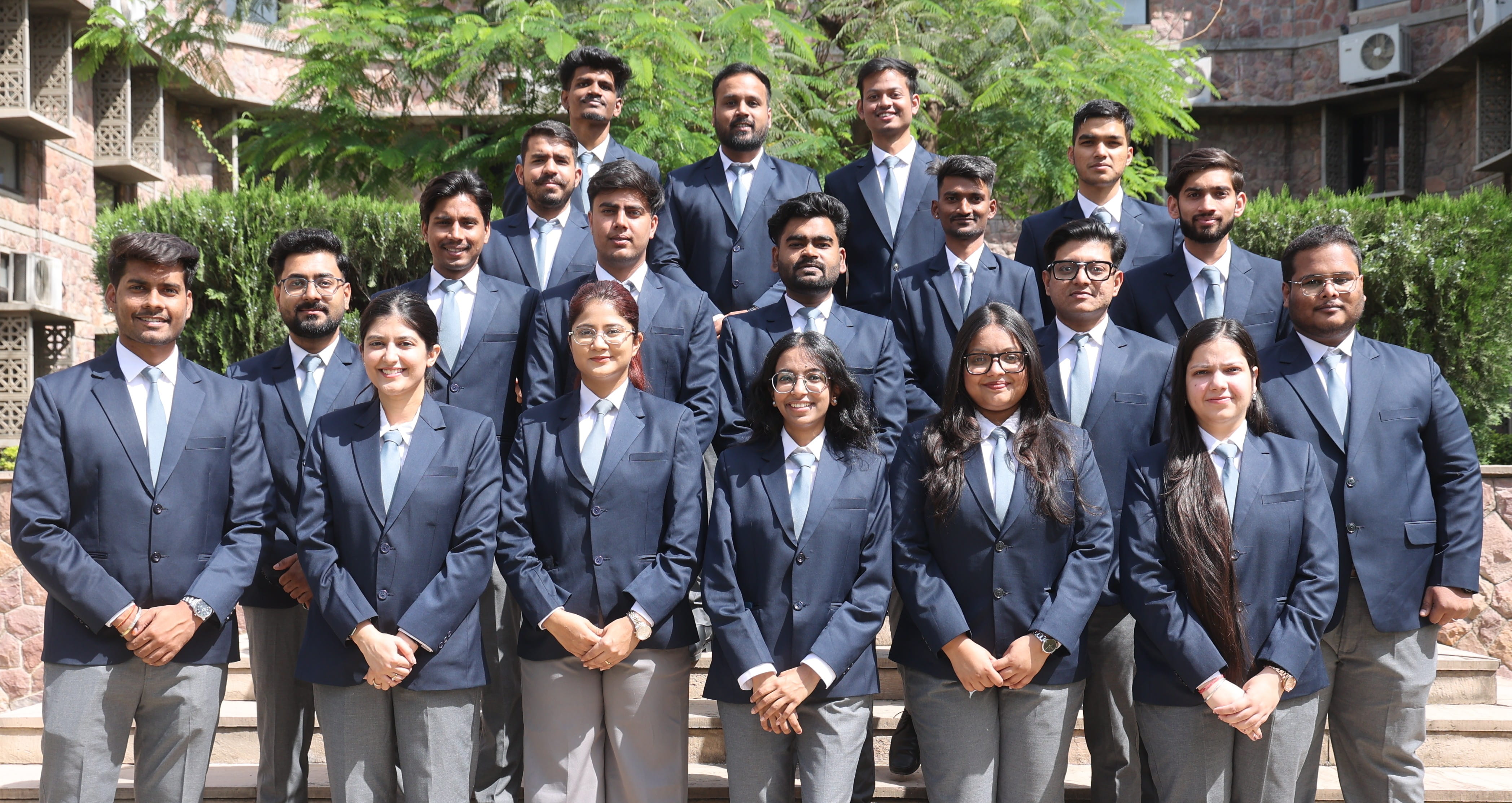
Cohort size: Limited seats (typically around 15) to keep the learning environment close-knit
Tuition: Total tuition is approximately one-third of what students pay for the same MPH course directly at Johns Hopkins University, USA
Travel and lodging: IIHMR University provides scholarships covering international travel, lodging, and insurance for the Baltimore institute
The pedagogy combines classroom teaching, live online sessions with Johns Hopkins faculty, fieldwork, a capstone research project, and a hands-on practicum - designed so that graduates are ready to step into public health leadership roles immediately on graduation.
Why Does This Master of Public Health Programme Stand Out?
A few features make this MPH course meaningfully different from other public health master's options in India:
A genuine Johns Hopkins degree. This is not an affiliation or a co-branded certificate. The MPH is awarded by Johns Hopkins BSPH and IIHMR University. Graduates join the BSPH alumni network of over 28,000 public health professionals working in more than 120 countries.
The world's #1 public health school as your teaching institution. Johns Hopkins BSPH is the oldest and largest independent school of public health, founded in 1916, with faculty conducting research in over 180 countries.
A curriculum tailored for India and South Asia. BSPH and IIHMR University faculty jointly tailor the core courses with Indian case studies, examples, and field contexts, so the learning translates directly to the work environment graduates are likely to enter.
One-third of the US tuition. Total tuition is around USD 22,000 - split between Johns Hopkins and IIHMR University - which is significantly more affordable than the equivalent fee for a full-time MPH at Baltimore.
In-person time at Baltimore. Students travel to the Bloomberg School campus during the programme to attend a Summer Institute, interact with global faculty, and study alongside Johns Hopkins students from other countries.
Curriculum Structure
The Johns Hopkins - IIHMR MPH curriculum is built around the same competency framework that the Bloomberg School uses for its Baltimore MPH. Courses are jointly delivered, with Johns Hopkins faculty teaching online sessions and IIHMR University faculty handling in-person classes at the Jaipur campus.
Core Competency Areas
- Epidemiology
- Biostatistics
- Environmental Health Sciences
- Public Health Biology
- Health Policy and Management
- Social and Behavioural Sciences
- Public Health Ethics
- Programme Planning and Evaluation
Programme Components
23 didactic courses spread across the two years
A capstone project where students synthesise their coursework into a apply their coursework to a substantial public health challenge.
A practicum - a field-based assignment in the second year, mentored by faculty and external public health professionals, that gives students real-world exposure to community or institutional public health practice
A two-week residential institute at Johns Hopkins BSPH, Baltimore, where students attend in-person classes, work with global faculty, and connect with the wider BSPH community
Two Academic Tracks
After the foundational coursework, students can choose between two pathways:
General MPH - broad-based public health training across all core competency areas
MPH in Implementation Science (MPH-IS) - focused on frameworks and methods for translating public health interventions into scalable, real-world programmes
Career Outcomes and Scope
A JHU - IIHMR cooperative MPH Program opens up diverse career pathways across the public, private, and global health sectors. Common roles include:
- Public Health Programme Manager
- Epidemiologist
- Health Policy Analyst
- Monitoring and Evaluation Specialist
- Health Systems Researcher
- Implementation Science Specialist
- Health Economist
- Programme Officer at international organisations
- Public Health Consultant
- Health Communications and Behaviour Change Specialist
Where Graduates Work?
Global health organisations: WHO, UNICEF, UNDP, UNFPA, the Global Fund
Government and policy bodies: Ministry of Health and Family Welfare, National Health Mission, state health departments, NITI Aayog
- Bilateral and multilateral agencies: USAID, DFID/FCDO, GIZ, KfW
- Research and academic institutions: ICMR, PHFI, AIIMS, leading universities, and international research consortiums
- NGOs and foundations: Bill & Melinda Gates Foundation, PATH, CARE India, Population Council, Save the Children
Private sector: Hospital chains, health-tech firms, pharmaceutical companies, consulting firms, and health insurance providers
Industry Relevance
Public health has moved decisively to the centre of policy and investment, both globally and in India. A few trends are shaping demand for trained public health professionals:
Sustained government investment under Ayushman Bharat, the National Health Mission, and primary healthcare expansion
- The growth of disease surveillance, outbreak response, and pandemic preparedness systems
- Increasing focus on non-communicable diseases, mental health, and climate-health linkages
- Expansion of digital health, telemedicine, and health data systems
Rising demand from global agencies for trained public health managers familiar with low- and middle-income country contexts
Growth of implementation science as a discipline, focused on translating evidence into practice at scale
For students considering an MPH course in India, these macro shifts mean the degree leads to roles that are well-paid, intellectually demanding, and high-impact.
Frequently Asked Questions
1. How is this MPH different from other Master of Public Health programmes in India?
The combination of a Johns Hopkins degree, the BSPH curriculum tailored for India, the Baltimore residency, and the small cohort size makes this MPH course distinct.
2. How long is the MPH course at IIHMR-Johns Hopkins?
The programme is a two-year, full-time degree.
3. Do students have to travel to the United States?
Yes - but only for a two-week Summer or Winter Institute at the Bloomberg School in Baltimore.
4. What is the total cost of the programme?
Total cost is USD 22,000, and can be payable in installments.
5. Is work experience mandatory for admission?
A minimum of two years of full-time work experience in a health-related role is required. The work experience requirement is waived for candidates holding a PhD or MBBS degree.
6. Can international students apply?
Yes. The programme is open to candidates from India and other South Asian countries, and international applications are reviewed under the same eligibility framework. English proficiency and credential evaluation through WES are required for foreign transcripts.
7. Are there any scholarships available for candidates?
Yes, academic excellence scholarships are available for candidates selected for admission to the programme. The scholarship details are as follows:
For MBBS Graduates: Scholarships worth USD 1,200 are available for MBBS graduates who have secured an aggregate of 55% or above in their MBBS degree.
For Non-MBBS Graduates: Five scholarships of USD 1,200 each are available for non-MBBS graduates who have secured 60% or above in their bachelor's degree and have demonstrated strong public health experience. These scholarships will be awarded based on merit.
Additionally, the programme offers significant value, as the fee structure is approximately one-third of the cost of pursuing an MPH at JHU, USA.
8. What kind of jobs do graduates typically take up?
MPH graduates have career opportunities across a wide range of organizations, including healthcare institutions, consulting firms, development and implementation partners, government bodies, academic and research institutions, hospitals, NGOs, UN agencies, funding organizations, and public health departments. The programme offers strong career flexibility, allowing graduates to work in diverse roles such as Program Managers, Epidemiologists, Technical Consultants, Monitoring and Evaluation Officers, Disease Surveillance Experts, Public Health Specialists, Public Health Administrators, Policy Analysts, Project Leads, and Portfolio Managers within donor and implementation agencies.


 Download Brochure