
- About Us
-
Academics
Schools
Programs
General Information
-
Faculty
The faculty members and researchers working at IIHMR University come from varied backgrounds including, but not limited to medicine, public health, management, economics, statistics, demography, human geography, social and behavioral sciences, rural development and pharmaceuticals.
-
Admissions
- Research
Publications & Journal
- Executive Education
- Training
- Placements
- Contact
- Blog
- Fee Payment
- NAAC
- IQAC
- NIRF
-
About Us
- About IIHMR University
- Board of Management
- Academic Council
- Board of Studies
- Research Board
- Institutional Review Board
- Finance & Audit Committee
- Departmental Research Committee
- Chairperson's Message
- President's Message
- IIHMR University Act
- Infrastructure
- Collaboration
- Ranking
- Board of Studies (School of Digital Health)
- Awards & Accolades
-
Academics
- Institute of Health Management Research
- School of Pharmaceutical Management
- ML Mehta School of Development Studies
- School of Digital Health
- SD Gupta School of Public Health
- MBA (Hospital and Health Management)
- MBA (Pharmaceutical Management)
- MBA (Healthcare Analytics)
- Master of Public Health
- Master of Public Health (Offered by Johns Hopkins Bloomberg School of Public Health, USA in cooperation with IIHMR University, Jaipur, India)
- PhD Programme
- MBA CSR & ESG Management (Executive)
- MBA Sustainable Business Management (Executive)
- Common Information for all the Programs
- Academic Calendar
- Committees
- Policies
- Annual Exam Calendar
- Library
- Faculty
- Officers of University
- Dean of Institute of Health Management Research
- Dean of School of Pharmaceutical Management
- Dean of School of Development Studies
- Dean of SD Gupta School of Public Health
- Dean of School of Digital Health
- School of Digital Health
- Faculty List A to Z
- Faculty List Designation Wise
- Faculty List School Wise
- Admissions
- Research
- Executive Education
- Training
- Placements
- Alumni
- Events
- Job Openings
- Contact
- Research

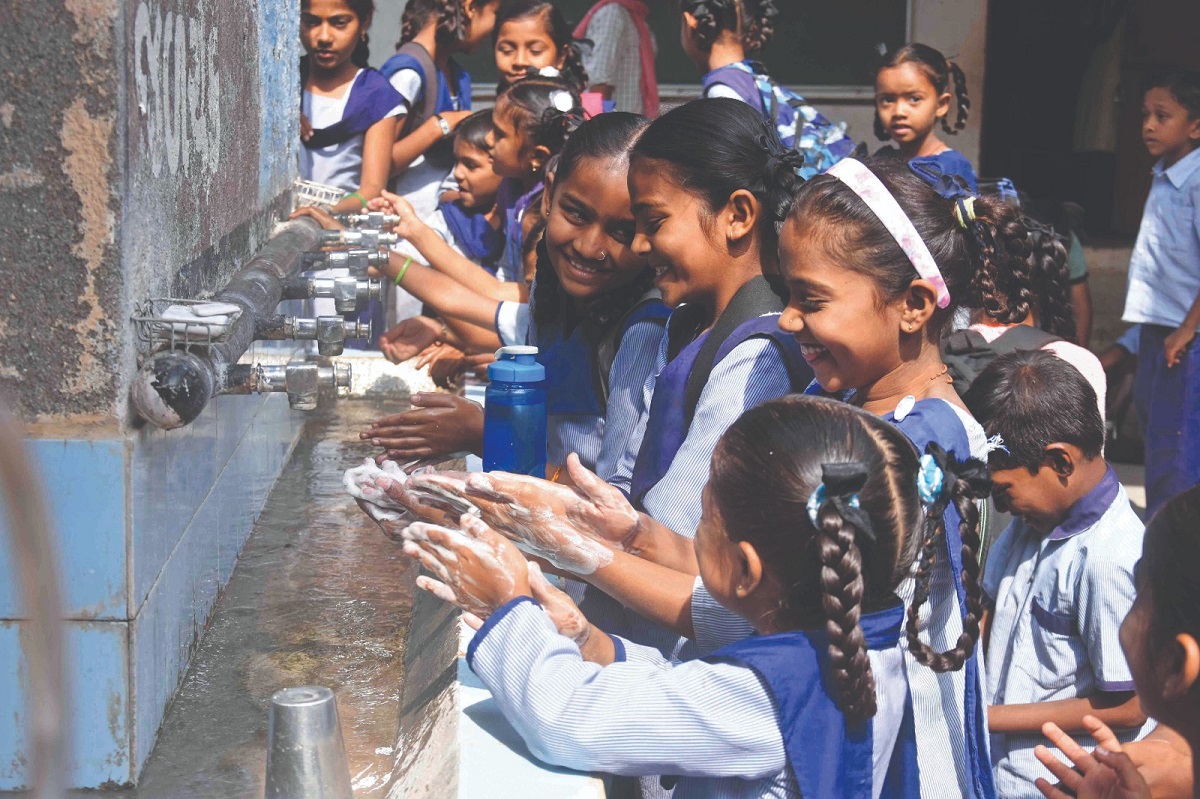
WASH Programme : Plan, Implement, Monitor and Evaluate
Management Development Programme
on
WASH Programme : Plan, Implement, Monitor and Evaluate
December: 13 - 15, 2023
Programme Coordinator : Dr. Hemant Mishra
Background
WASH professionals and well-informed policymakers are key stakeholders to provide WASH services to community members around the world. Currently, it is seen that over 1.3 billion people are facing severe water, sanitation, and hygiene (WASH) challenges in India. Access to clean drinking water and sanitation facilities resulted in high rates of water borne diseases leading to serious health and economic burden on families and country. To address these challenges, government of India (GoI) has taken several initiatives to improve WASH conditions in the country, such as the Swachh Bharat Mission (SBM phase I and II) and the Jal shakti programme. However, there are still significant challenges seen in planning, implementation, monitoring, and evaluation covering different issues such as lack of access to clean water, inadequate sanitation facilities, poor hygenic practices, poor infrastructure, gender inequality, cultural practices, Urbanisation, climate change, funding etc.
Programme Objectives / What You Can Expect:
The programme objectives are.
- To develop understanding and skill to plan and implement effectively WASH programmes in urban and rural areas.
- To understand and analyse the nuisance of need assessment of WASH programmes and
- To develop capacity on how to do effective monitoring and evaluation of WASH programmes.
Introduction / Programme Overview
The successful planning and implementation of any programme begins with a shared vision and facilitates taking effective decisions. Literature also reflects that planning is more easily done through incremental steps, which could be defined monthly, annually, biannually or any other appropriate period. Currently, professionals working in the WASH area are managing programme in lack of proper information and knowledge on strategic management, how to conduct situational analysis, how to develop logical framework analysis, and how to do monitoring and evaluation. The current programme is designed to address the existing gaps in operationalizing the WASH aligned programmes at country, state, district and block level and will develop skills among them.
Course Contents / Programme Highlights
- WASH Scenario In India: Opportunities, Challenges and Policies
- Situational Analysis, Need Assessment and Theory of Change
- SWOT and PESTAL Analysis on WASH Programmes
- Logical Framework Analysis
- CPM and PERT techniques to take effective decision.
- Fostering Community Participation through Result Based Management
- Monitoring through Technology such as Open Data Kit or Google Forms
- Evaluation methods focusing on Impact Assessment
Learning Outcomes / Key Programme Takeaways
By the end of this programme, participants will be able to articulate: What is an enabling environment for WASH programmes? What is the Framework and Theory of Change to design any WASH related programmes? How a WASH programme can be successfully planned and implemented in any region? What are the governance functions that support enabling environment strengthening? What is the support process for strengthening the enabling environment for WASH programmes?
Who Should Attend? / Potential Beneficiaries
This programme provides training to mid-career level professionals who are working with different projects/programmes, and practicing designing of programmes in Government sector (Especially with Swachha Bharat Mission, Jal Jeevan Mission, Department of Helath and Family Welfare, Department of Panchayati Raj Institution and Rural Development), CSR division of corporate groups, Key officials from Non-Governmental Organizations, Bilateral agencies / Donors, Researchers and University professors from Academic Institutions, and Non-Governmental Organizations
Pedagogy and Learning Environment
The programme will use a mix of training methods including lecture-cum-discussion, case study analysis, group work, assignment, and experiential learning.
Key Resource Persons
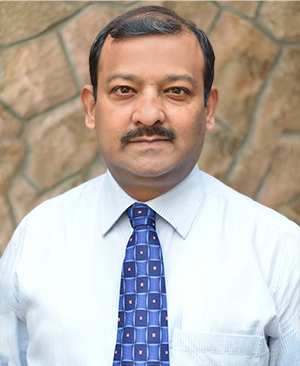
Dr. Hemanta Kumar Mishra, Ph.D

Dr. Goutam Sadhu
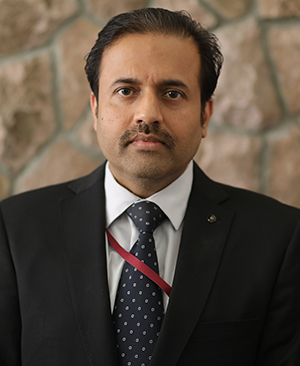
Dr. Susmit Jain
Programme Fee
The programme fee for Indian participant is Rs.24,750 plus GST (18% as applicable) and for International participant is USD 462 plus GST (18% as applicable). The fee covers tuition fees, background reading material, lodging and boarding.
Discounts
Early Bird Discount: Nominations received with payments on or before 4-weeks (November 12, 2023) will be entitled to an early bird discount of 10%.
Group Discount: Any organization sponsoring four or more participants to the programme will be entitled for a discount of 20% on the total fee payable provided that at least four participants attend the programme.
Maximum Discount: Organization can avail themselves of both the discounts subject to maximum discount of 20%.
Venue and Duration
The training has been scheduled between December 13 - 15, 2023. The Venue of the programme would be IIHMR University, Jaipur, India. IIHMR University is located near Jaipur International airport, Sanganer, Jaipur. The University campus provides a learning environment to the participants. The participants are welcome to use the library and recreational facilities at the campus.
Certification
A certificate of participation on completion of the programme will be issued by IIHMR University, Jaipur.
Contact Us
All the communication regarding the programme should be made with the MDP Office at the following address.
MDP Office
IIHMR University
1, Prabhu Dayal Marg, Sanganer Airport
Jaipur – 302029, Rajasthan
Phone Number: Mobile: +919358790012, 0141-3924700 (ext. 758)
Email: training@iihmr.edu.in
x
x